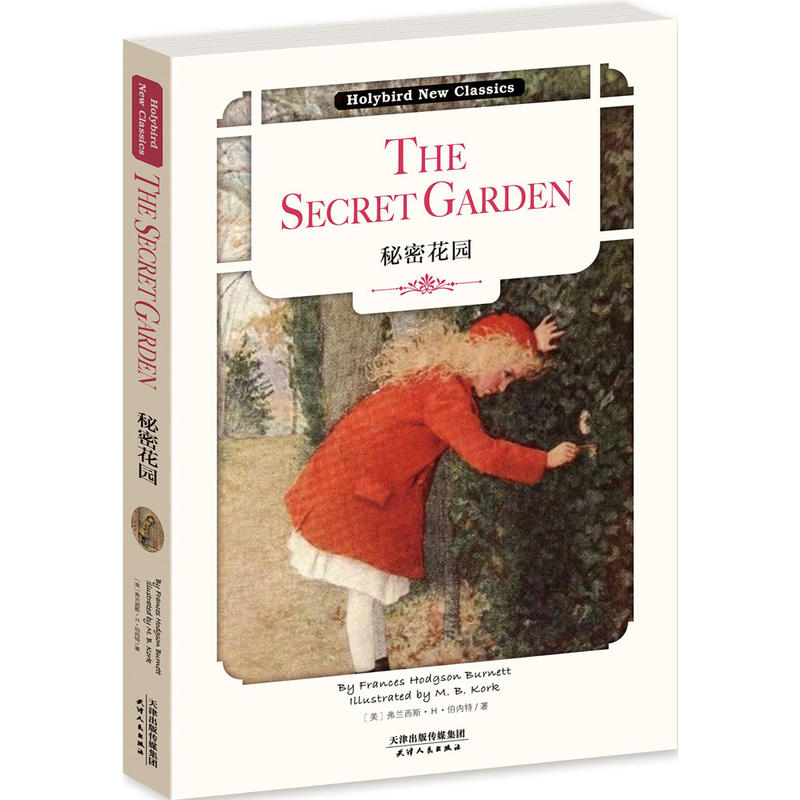
美國女作家弗蘭西斯·H·伯內特的《秘密花園》 (The SecretGarden),是一部百年來暢銷不衰的經典 ,它被一代代孩子們不斷重復閱讀,是很多人童年時代記憶最深刻的一本書。故事主要講述了一個在 中失去父母的 ,搬到英國后重新獲得幸福生活的故事。一場霍亂使性情怪戾的瑪麗成了孤兒,她只得被送往遠在英國約克郡的密素斯特莊園和姨父克萊文先生一起生活。克萊文先生傷心妻子之死,變得陰郁古怪消沉遁世,他的莊園里有上百間被鎖閉的房間,有十年不許 進入的秘密花園。瑪麗意外地在 的幫助下找到這個秘密花園的大門和鑰匙,并且,她還聽到了一個神秘的哭聲,吸引著她去之謎。
瑪麗在迪肯的幫助下,使荒蕪的花園重現生機。不久,被認為離死不遠的莊園小主人科林也參與了進來。大自然的力量改變了一切,長年籠罩在陰霾之下的古老莊園及其主人也一同獲得了新生。
The Secret Garden is anovel by Frances Hodgson Burnett. It was first published in its entirety in1911. It is now one of Burnett's most popular novels, and is considered to be aclassic of English children's literature. Several stage and film adaptationshave been produced.
This book bringstogether the three lonely children: Mary, who has no close family and is notfond of people; Colin, who is so full of hatred, self-pity and anger, and whois not even sure whether his father loves him, but is certain that he is goingto die; and Dickon, who although constantly has a bright and sunny disposition,prefers the company of animals to people, until he meets Mary.
The Secret Garden is charming and wonderfully written, full of the rightamount of intrigue for children. It is considered to be the epitome ofchildren’s literature, it is still read and loved by many children today, eventhough it’s over 100 years old.
THERE IS NO ONE LEFT
When Mary Lennox wassent to Misselthwaite Manor to live with her uncle everybody said she was themost disagreeablelooking child ever seen. It was true, too. She had a littlethin face and a little thin body, thin light hair and a sour expression. Herhair was yellow, and her face was yellow because she had been born in India andhad always been ill in one way or another. Her father had held a position underthe English Government and had always been busy and ill himself, and her motherhad been a great beauty who cared only to go to parties and amuse herself withgay people. She had not wanted a little girl at all, and when Mary was born shehanded her over to the care of an Ayah, who was made to understand that if shewished to please the Mem Sahib she must keep the child out of sight as much aspossible. So when she was a sickly, fretful, ugly little baby she was kept out ofthe way, and when she became a sickly, fretful, toddling thing she was kept outof the way also. She never remembered seeing familiarly anything but the darkfaces of her Ayah and the other native servants, and as they always obeyed herand gave her her own way in everything, because the Mem Sahib would be angry ifshe was disturbed by her crying, by the time she was six years old she was astyrannical and selfish a little pig as ever lived. The young English governesswho came to teach her to read and write disliked her so much that she gave upher place in three months, and when other governesses came to try to fill itthey always went away in a shorter time than the first one. So if Mary had notchosen to really want to know how to read books she would never have learnedher letters at all.
One frightfully hotmorning, when she was about nine years old, she awakened feeling very cross,and she became crosser still when she saw that the servant who stood by herbedside was not her Ayah.
“Why did you come?”she said to the strange woman. “I will not let you stay. Send my Ayah to me.”
The woman lookedfrightened, but she only stammered that the Ayah could not come and when Marythrew herself into a passion and beat and kicked her, she looked only morefrightened and repeated that it was not possible for the Ayah to come to MissieSahib.
There was somethingmysterious in the air that morning. Nothing was done in its regular order andseveral of the native servants seemed missing, while those whom Mary saw slunkor hurried about with ashy and scared faces. But no one would tell her anythingand her Ayah did not come. She was actually left alone as the morning went on,and at last she wandered out into the garden and began to play by herself undera tree near the veranda. She pretended that she was making a flower-bed, andshe stuck big scarlet hibiscus blossoms into little heaps of earth, all thetime growing more and more angry and muttering to herself the things she wouldsay and the names she would call Saidie when she returned.
“Pig! Pig! Daughter ofPigs!” she said, because to call a native a pig is the worst insult of all.
Shewas grinding her teeth and saying this over and over again when she heard hermother come out on the veranda with some one. She was with a fair young man andthey stood talking together in low strange voices. Mary knew the fair young manwho looked like a boy. She had heard that he was a very young officer who hadjust come from England. The child stared at him, but she stared most at hermother. She always did this when she had a chance to see her, because the MemSahib—Mary used to call her that oftener than anything else—was such a tall,slim, pretty person and wore such lovely clothes. Her hair was like curly silkand she had a delicate little nose which seemed to be disdaining things, andshe had large laughing eyes. All her clothes were thin and floating, and Marysaid they were “full of lace.” They looked fuller of lace than ever thismorning, but her eyes were not laughing at all. They were large and scared andlifted imploringly to the fair boy officer’s face.
“Is it so very bad?Oh, is it?” Mary heard her say.
“Awfully,” the youngman answered in a trembling voice. “Awfully, Mrs. Lennox. You ought to havegone to the hills two weeks ago.”The Mem Sahib wrung her hands.
“Oh, I know I ought!”she cried. “I only stayed to go to that silly dinner party. What a fool I was!”
At that very momentsuch a loud sound of wailing broke out from the servants’ quarters that sheclutched the young man’s arm, and Mary stood shivering from head to foot. Thewailing grew wilder and wilder. “What is it? What is it?” Mrs. Lennox gasped.
“Some one has died,”answered the boy officer. “You did not say it had broken out among yourservants.”
“I did not know!” theMem Sahib cried. “Come with me! Come with me!” and she turned and ran into thehouse.
After that, appallingthings happened, and the mysteriousness of the morning was explained to Mary.The cholera had broken out in its most fatal form and people were dying likeflies. The Ayah had been taken ill in the night, and it was because she had justdied that the servants had wailed in the huts. Before the next day three otherservants were dead and others had run away in terror. There was panic on everyside, and dying people in all the bungalows.