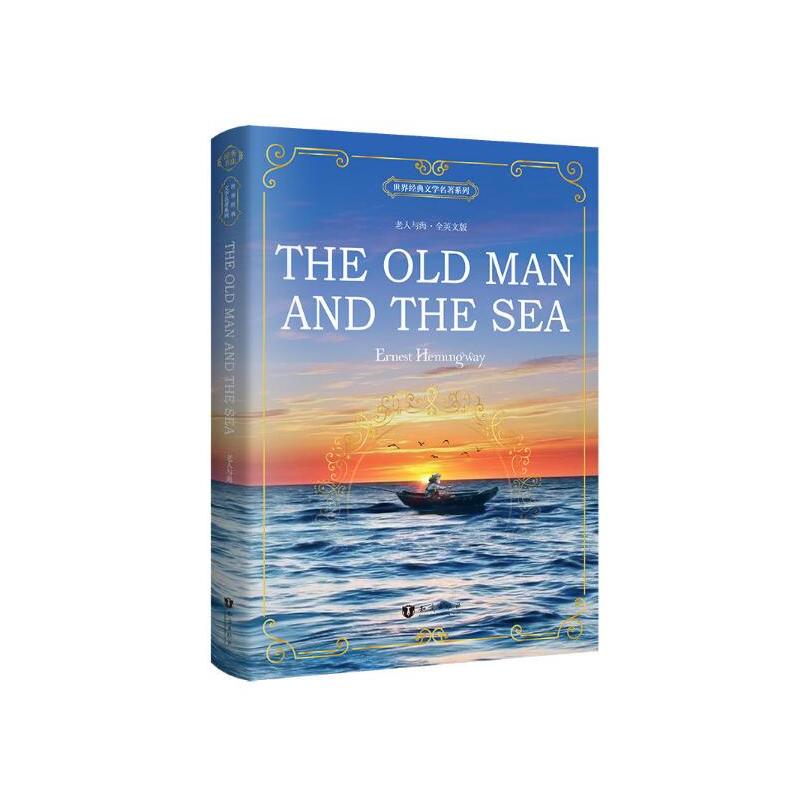
《老人與海》故事的背景發生在在二十世紀中葉的古巴。主人公是一位名叫圣地亞哥的老漁夫,配角是一個叫馬諾林的小男孩。風燭殘年的老漁夫一連八十四天都沒有釣到一條魚,但他仍不肯認輸,而是充滿著奮斗的精神,終于在第八十五天釣到一條身長十八尺,體重一千五百磅的大馬林魚。大魚拖著船往海里走,老人依然死拉著不放,即使沒有水,沒有食物,沒有武器,沒有助手,左手抽筋,他也絲毫不灰心。經過兩天兩夜之后,他終于殺死大魚,把它拴在船邊。但許多鯊魚立刻前來搶奪他的戰利品。他一一地殺死它們,到最后只剩下一支折斷的舵柄作為武器。結果,大魚仍難逃被吃光的命運,最終,老人筋疲力盡地拖回一副魚骨頭。他回到家躺在床上,在夢中憶起那往日的美好歲月。
主要成就
◆ 影響歷史的百部經典之一
◆ 美國歷史上里程碑式的32本書之一
◆ 1953年獲普利策獎
◆ 1954年獲諾貝爾文學獎
◆ 1986年法國《讀書》雜志推薦的理想藏書
◆ 48小時內賣出530萬本,銷量排名領先
著名評論
◆ 由于他精湛的小說藝術——這在其近著《老人與海》中有充分表現——同時還由于他對當代文體的影響。——獲得諾貝爾文學獎評語
◆ 《老人與海》是一部異常有力、無比簡潔的作品,具有一種無可抗拒的美。——瑞典文學院院士霍爾斯陶穆
◆ 《老人與海》講了一個老漁夫的故事,但是在這個故事里卻揭示了人類共同的命運。我佩服老人的勇氣,佩服他不屈不撓的斗爭精神,也佩服海明威。——當代著名作家王小波
The Old Man and the Sea
He was an old man who fished alone in a skiff in the Gulf Stream and he had gone
eighty-four days now without taking a fish. In the first forty days a boy had been
with him. But after forty days without a fish the boy’s parents had told him that the old man was now definitely and finally salao, which is the worst form of unlucky, and the boy had gone at their orders in another boat which caught three good fish the first week. It made the boy sad to see the old man come in each day with his skiff empty and he always went down to help him carry either the coiled lines or the gaff and harpoon and the sail that was furled around the mast. The sail was patched with flour sacks and, furled, it looked like the flag of permanent defeat.
The old man was thin and gaunt with deep wrinkles in the back of his neck. The brown blotches of the benevolent skin cancer the sun brings from its reflection on the tropic sea were on his cheeks. The blotches ran well down the sides of his face and his hands had the deep-creased scars from handling heavy fish on the cords. But none of these scars were fresh. They were as old as erosions in a fishless desert. Everything about him was old except his eyes and they were the same color as the sea and were cheerful and undefeated.
“Santiago,” the boy said to him as they climbed the bank from where the skiff was hauled up. “I could go with you again. We’ve made some money.”
The old man had taught the boy to fish and the boy loved him.
“No,” the old man said. “You’re with a lucky boat. Stay with them.”
“But remember how you went eighty-seven days without fish and then we caught big
ones every day for three weeks.”
“I remember,” the old man said. “I know you did not leave me because you doubted.”
“It was papa made me leave. I am a boy and I must obey him.”
“I know,” the old man said. “It is quite normal.”
“He hasn’t much faith.”
“No,” the old man said. “But we have. Haven’t we?”
“Yes,” the boy said. “Can I offer you a beer on the Terrace and then we’ll take the
stuff home.”
“Why not?” the old man said. “Between fishermen.”
……